
How one women’s savings group in the Democratic Republic of Congo helped create an opportunity for another community — and how a small investment can travel much further than expected.
What if the greatest potential for change lies not only in supporting communities, but in enabling communities to support one another?
What if a successful initiative could become the starting point for another, allowing the same resources to create opportunities again and again?
In Walungu, in the Democratic Republic of Congo (DRC), a group of women is demonstrating what happens when communities take the lead in shaping their own future. Their story is about much more than access to clean water. It is about collective action, local ownership, trust, and the power of reinvesting in one another.
And perhaps most importantly, it is about how one community’s success can become another community’s opportunity.
It started with a shared need and a collective decision
In the DRC, where poverty and limited access to basic services remain significant challenges, access to clean water is a daily concern for many families.
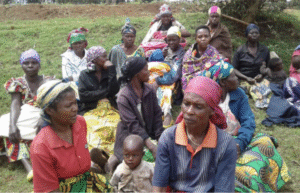
For women in Walungu and neighbouring Kabare, the solution began with something they already understood: saving together.
Through women’s savings groups, 25 members at a time pooled $1,250 from modest household incomes. Some raised chickens, others sold eggs or operated small businesses. Individually, their contributions were small. Collectively, they became the foundation for something much bigger.
Their greatest priority was simple: clean water.
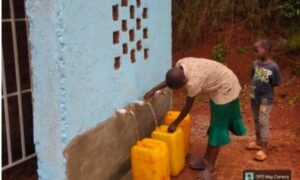
With support from local partner ASSIT and an additional $6,000 co-investment from Kula International, the women helped establish a six-tap water installation. They contributed labour and oversight, while a local technician supported the technical design and water quality.
Within just four months, the system began serving approximately 1,500 villagers. 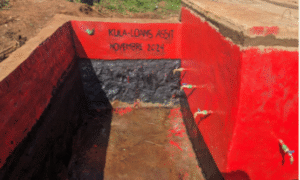
The women became the owners and operators of the facility. Families could purchase a 20-litre container of water for $0.20, with around 150 containers sold daily. The resulting income provided a way to repay the initial financing while creating a sustainable source of revenue.
But something even more important was happening: the women were demonstrating that they could identify a problem, mobilise their own resources, manage an investment, and build a solution for their community.
And then something remarkable happened: the money moved on
Often, the story of a development project ends when the infrastructure is completed, the beneficiaries have received support, or the initial investment has been repaid.
But what if that is not where the story has to end?
In this case, the repayment of the financing by the women’s savings group, went to another saving group TUUNGANE MIKONO, in another village. It opened the door to something new.
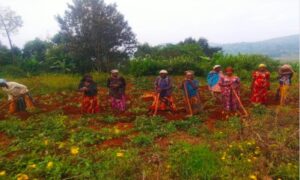
Rather than allowing the recovered funds to remain tied to the original initiative, ASSIT, in partnership with Kula Loans International, used a revolving fund approach to reinvest the money in another community initiative.
This time, the opportunity went to another community group. The recovered funds helped finance a new water supply installation, extending the benefits of the original investment to a new group of women. And this is no longer just an idea on paper.
One year after the funds were paid forward to Tuungane Mikono, that group pulled of the same (but different) result. In October 2026, the new water point has been completed and is already in use. The installation includes a storage tank and three taps, allowing several people to collect water at the same time. The initiative improves access to water for more than 1,500 households.
Think about what this means.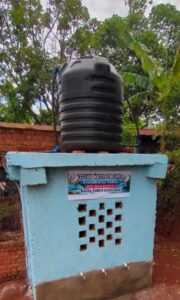
The original financing supported one community’s initiative. When that financing was repaid, the same capital created an opportunity for another community.
One investment. Two community initiatives. A much wider reach.
This is the power of a revolving fund: resources do not have to stop working after one successful project. They can be recovered, reinvested, and used to create further opportunities.
From one community to another: the beginning of a bigger movement
The experience in Walungu invites us to think differently about development.
Too often, communities are described through what they lack: money, infrastructure, services, or opportunities. Yet behind these challenges are people with skills, knowledge, ideas, and an enormous capacity to organise themselves.
The women of TUUNGANE MIKONO have shown what can happen when local initiative is supported and trusted. Their repayment has also helped demonstrate that community financing can have a life beyond its original beneficiaries. The second community is now benefiting from that same principle.
Imagine what could happen if this approach were expanded.
What if a community that has successfully established a water supply system could share its experience with another village?
What if savings groups learn from one another, exchange ideas, and inspire new collective investments?
What if one community’s successful agricultural project helped finance another community’s small business? Or if the experience of managing a water installation encouraged other groups to invest in essential services?
The possibilities are enormous.
A successful initiative could inspire another. Financial resources could circulate between communities. Practical knowledge could be shared, and local successes could become the foundation for new opportunities.
Instead of isolated projects, we could begin building a network of communities that support, strengthen, and learn from one another.
The real investment is in people
The story also reminds us that sustainable development is not simply about providing funding. It is about recognising local leadership and creating the conditions in which people can turn their own ideas into lasting solutions.
The partnership between ASSIT and Kula Loans International demonstrates the value of combining financial support with community participation, local responsibility, and reinvestment.
The communities remain at the heart of the process. They identify their needs, participate in solutions, and take responsibility for the initiatives that affect their daily lives.
External partners help create opportunities, but local people make those opportunities meaningful.
And when financial resources are repaid and reinvested, the impact can extend beyond the people who first benefited.
This is a different way of looking at development: not as a one-time transfer of resources, but as a continuing cycle of opportunity.
What if communities became each other’s greatest supporters?
Perhaps the next step is to think beyond individual projects and begin connecting communities more deliberately.
Imagine creating opportunities for women from different savings groups to meet, exchange experiences, and learn from one another.
Imagine communities sharing practical solutions to challenges such as access to water, food security, education, and income generation.
Imagine a successful community becoming a source of inspiration and encouragement for another that is just beginning its journey.
And imagine a financing model in which repaid funds continue to support new initiatives, allowing each successful investment to open the door for the next.
This is how a local success story can become a much bigger movement.
It does not mean that communities must solve every challenge alone. Partnerships, technical expertise, and financial investment remain essential. But it does mean recognising that communities are not simply recipients of support. They are partners, innovators, entrepreneurs, and agents of change.
A story that should not end in Walungu
The story began with women saving small amounts of money from their everyday activities because they wanted clean water for their families.
Their collective efforts helped create a water installation. Their repayment then made it possible for another community to benefit from a new investment.
And now, another water point is used by another 1500 households. Serving as a visible reminder of what can happen when resources, trust, and community leadership come together.
Perhaps this is the idea worth taking forward:
What if every successful community initiative could create an opportunity for another?
What if the impact of a project was measured not only by what it achieved for its first beneficiaries, but also by the opportunities it created for those who followed?
And what if communities began to see one another not as isolated places facing similar difficulties, but as potential partners in building a better future?
These powerful saving groups in DRC show us that change can travel.
One community’s repayment can become another community’s opportunity. One group’s success can inspire another group’s beginning. And one investment, when responsibly managed and reinvested, can keep creating possibilities long after its first chapter has ended.
Because when communities support one another, change does not have to stop with one success.
It can multiply.