
Let’s spark your imagination by the story of the Mapuche-Lafkenche women of Lake Budi, who are transforming their local hazelnut harvest into a model of circular economy and biocultural restoration. 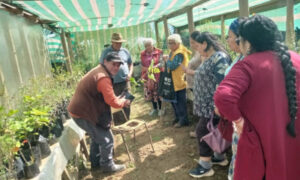
The Chilean hazelnut tree (known as gevuin or ngefv in the Mapuche language) is a native species. Its seeds germinate quickly and give rise to multiple byproducts, including hazelnut oil, rich in omega-3. This tree has been a pillar of Mapuche culture and local identity for generations. Chile’s indigenous people have a gathering tradition, coming from their mothers and grandmothers, who knew how to make use of the diversity of fruits offered by the forest.
In 2013 a Mapuche community financial group was established, grounded in the values and protocols of the ancestral people. With the support of a partner, Maple Microdevelopment. Over time, interest in economic sovereignty became intertwined with the richness of the territory and its fruits: hazelnuts amongst others. The community began recovering knowledge related to hazelnut gathering, something that was forgotten. “First came recognizing the fruit again, gathering it, and consuming it; then came the interest in transforming it into value-added products, such as flours, cosmetics, and an omega-3-rich oil that works very well as a natural sunblock,”
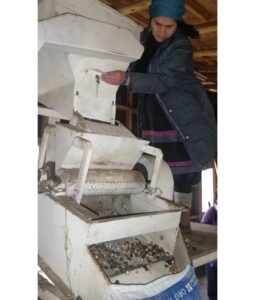 Then the community acquired machines to process hazelnuts. All kinds of products were made and sold over time. But more importantly, using words of a community member: “It has been very enriching, as a woman and as a mother, to teach children about forest fruits, show them where they come from, and what products can be made from them. It has been a beautiful and meaningful experience.”
Nowadays, the experience of the hazelnut oil laboratory extends beyond production and commercialization: it has become intertwined with community tourism, where local entrepreneurs share with visitors the properties of the hazelnut tree and its oil. Of course, supporting partners played an instrumental role in this decade of self-development, but the key of success here is the believe that true economic resilience is grown from the ground up, rooted in ancestral wisdom and collective action.
Big shout out to Maple MicroDevelopment for their leadership on this. And of course for sharing and decades of commitment to supporting Indigenous-led initiatives. 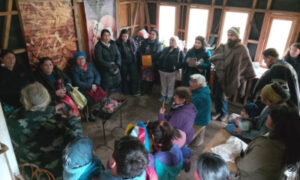
Read the full story here
Picture credits go to Filac