
Shared prosperity – a new kind of motivation?
Guest Autor: Sakhi Mishra – Vidushi Fellow at Drishtee
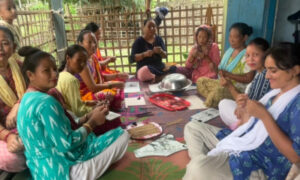
For the past few days, I had been slightly frustrated. As a Vidushi Fellow, I worked with a village in India, to grow wellbeing through income-generating activities. The women of the village were not grasping the concept of forming micro-enterprise groups, the importance of raw material procurement, costing, market linkage, etc. They were all waiting for raw material from a faraway source and were planning to produce agarbattis – incense sticks – by hand together. The women who were supposed to be in charge of training and guiding upcoming producer groups towards viability also wanted to sit and make incense sticks with everyone else.
After a few weeks of waiting, when they finally received the raw materials, they began production. Every day, a photo of the work done that day would reach the village WhatsApp group.
I had many questions for them. Are they thinking about the costing of the product? How would they earn from this? Had they recorded the raw material procurement cost, time consumed, number of hands at work, etc.? I planned to take some time out to go and observe them. I knew that convincing everyone to come for another meeting would probably lead to no conclusion. I wanted answers, but I did not know how to ask.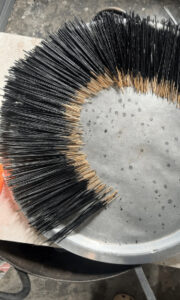
One morning, I set out for the village. When I arrived at the decided time at the village clubhouse, it appeared to be closed. A lady came right after me and recognised me. She asked me to wait while she frantically began calling out at different doors, asking the women to come out and exclaiming that I had arrived.
After a few minutes of waiting, someone came with the keys, opened the hall, and they began cleaning the area. They told me there was no electricity supply to the clubhouse, so they worked at the edge of the veranda outside, since that was the only area cool enough to sit and work without a fan.
They showed me, with immense pride, their battis: some without sticks, some just dried, some dipped in scent, some already packaged, while a few bundles had even been sold to women within the group itself. They also showed me their snacks, which they opened during their noon tea break.
The mat was then laid out, the paste was kneaded, and broken pieces of marble tile were distributed to roll the sticks on. They asked me if I wanted to join, and I instinctively said yes.
As I observed the others and began rolling my first stick, I felt like I wanted to do this all day. More people began gathering, the chatter started, and my first stick was complete. They appreciated it, saying I had done very well for my first time.
One of the women told me that after they started working, her phone data went unused every day, whereas before, it would get over in not even half a day. She said she had also been getting less angry. She would go home, do some housework, and just like that, it would be time for bed.
At that moment, something clicked.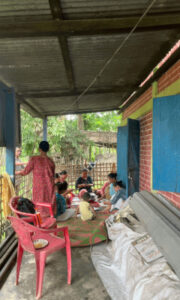
Was I forgetting something all this while? Was my definition of wealth limited? Had the creation of shared prosperity already begun, and had I failed to acknowledge it? How do we measure this kind of wealth, and should we even measure it?
What clicked did not give me answers to my pre-existing questions, but it brought some new questions to light. I felt a new kind of motivation.
As I was leaving, I asked them my first question since I had arrived:
“You all are doing great. Do you require my help with anything?”
One of the women replied right away, “We need help understanding the right cost of our battis.”